jp en
menu

exhibition

Capillary Drift

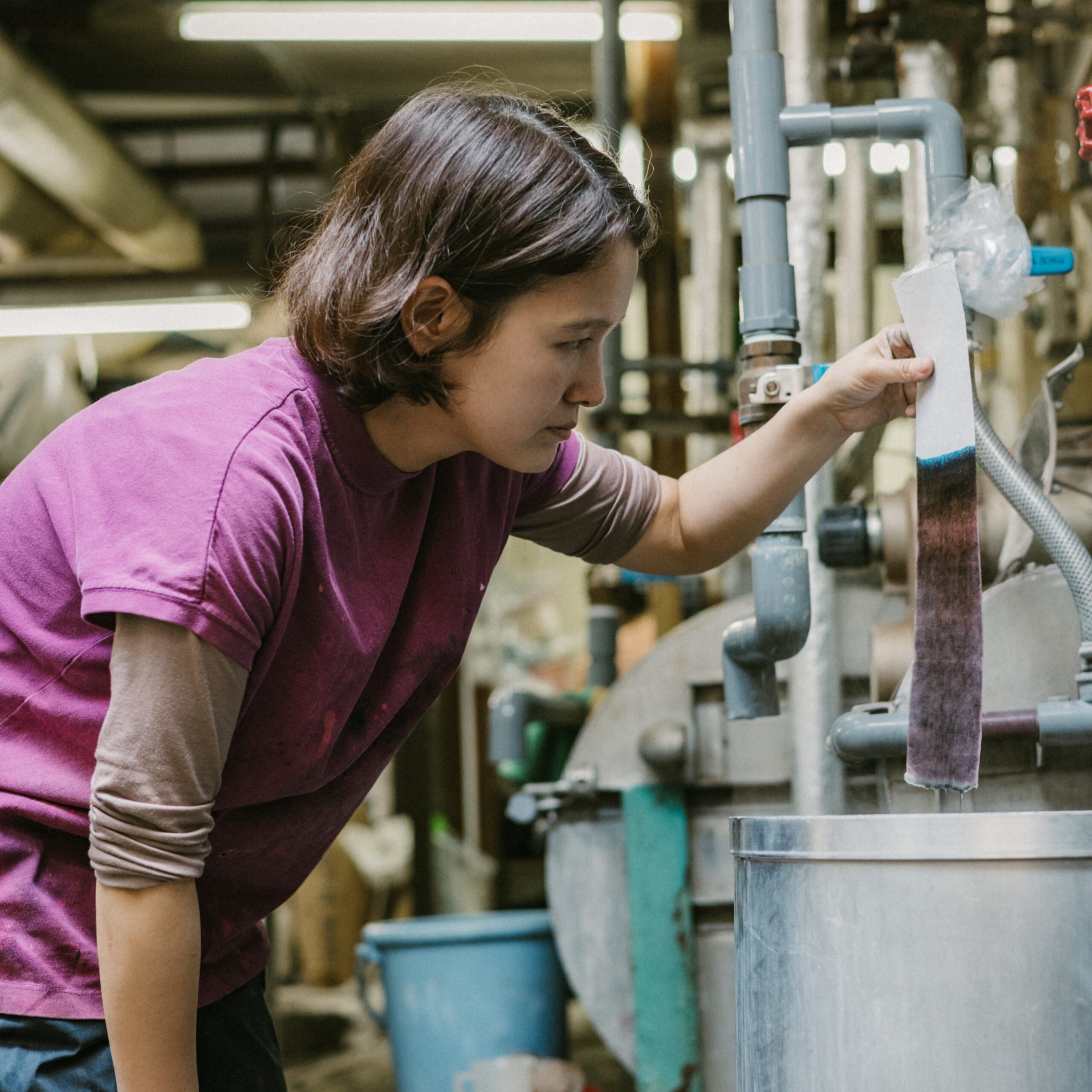
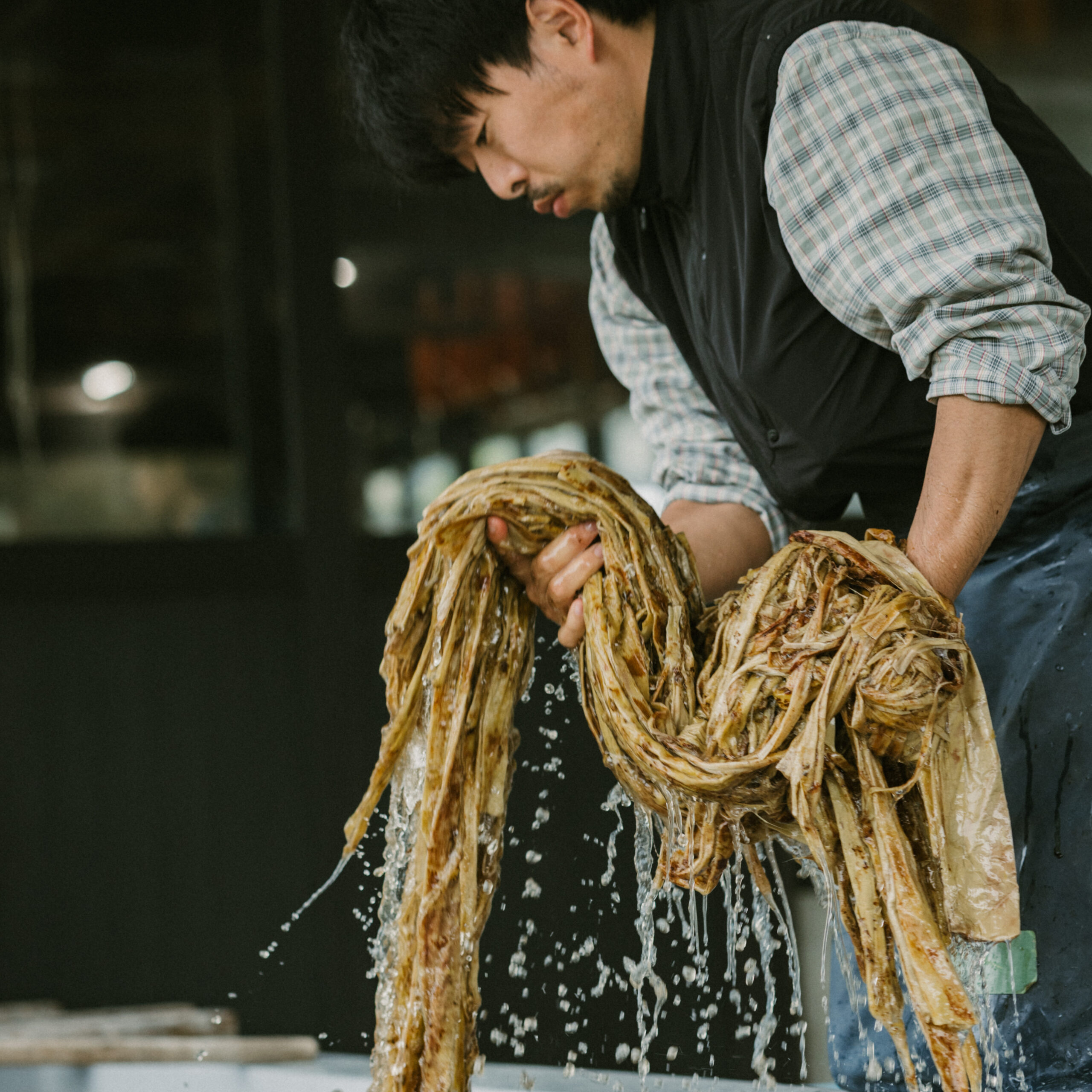
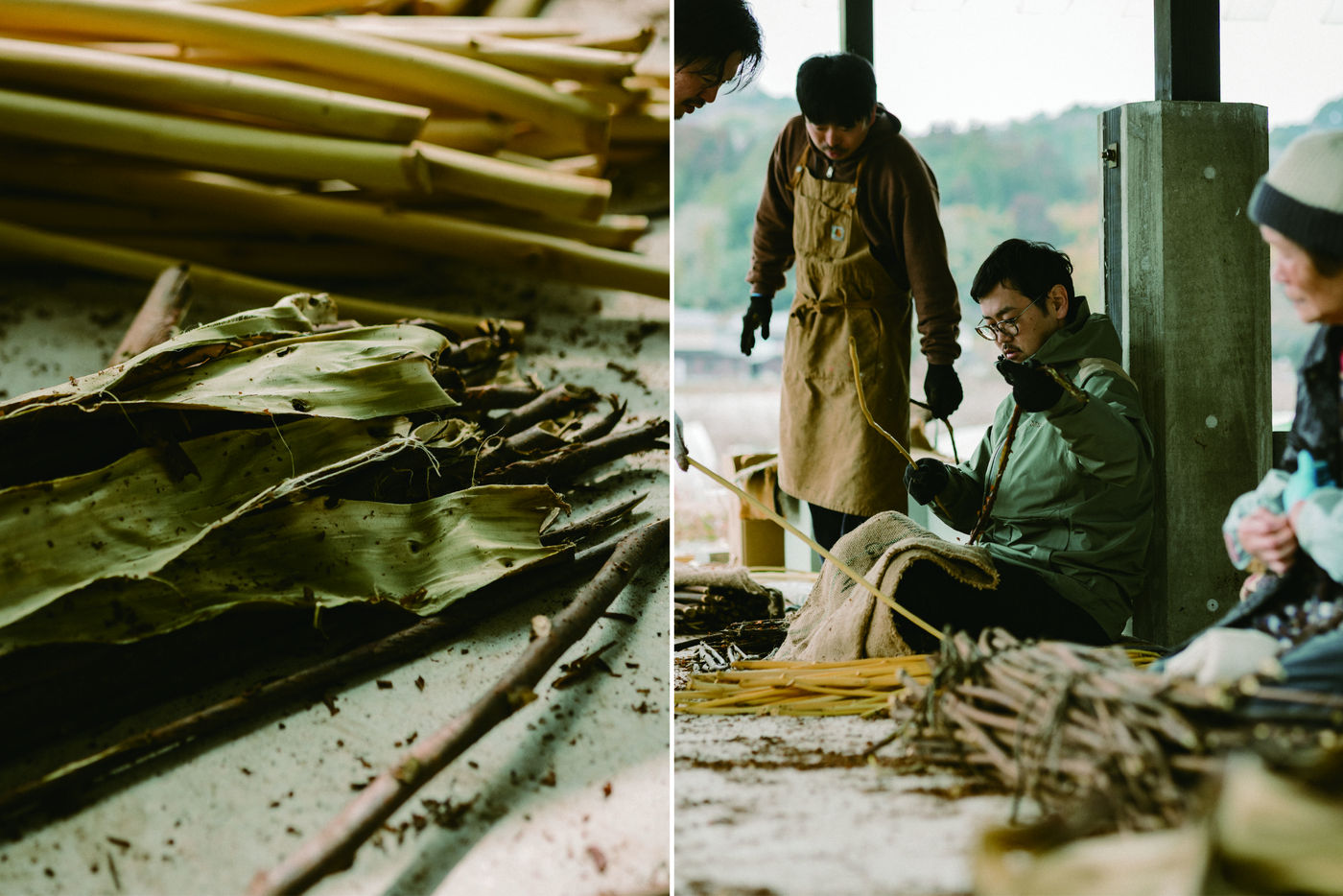
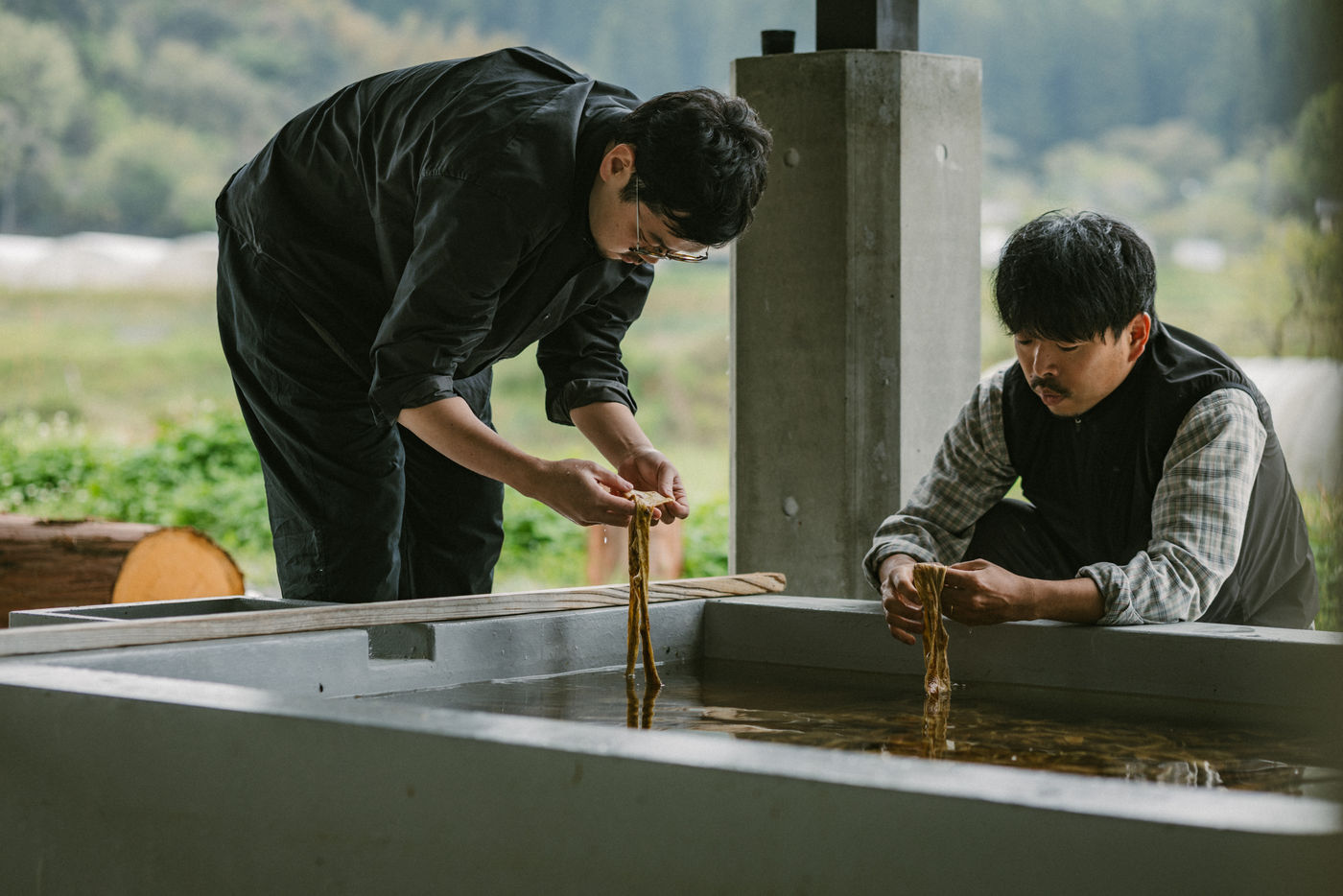
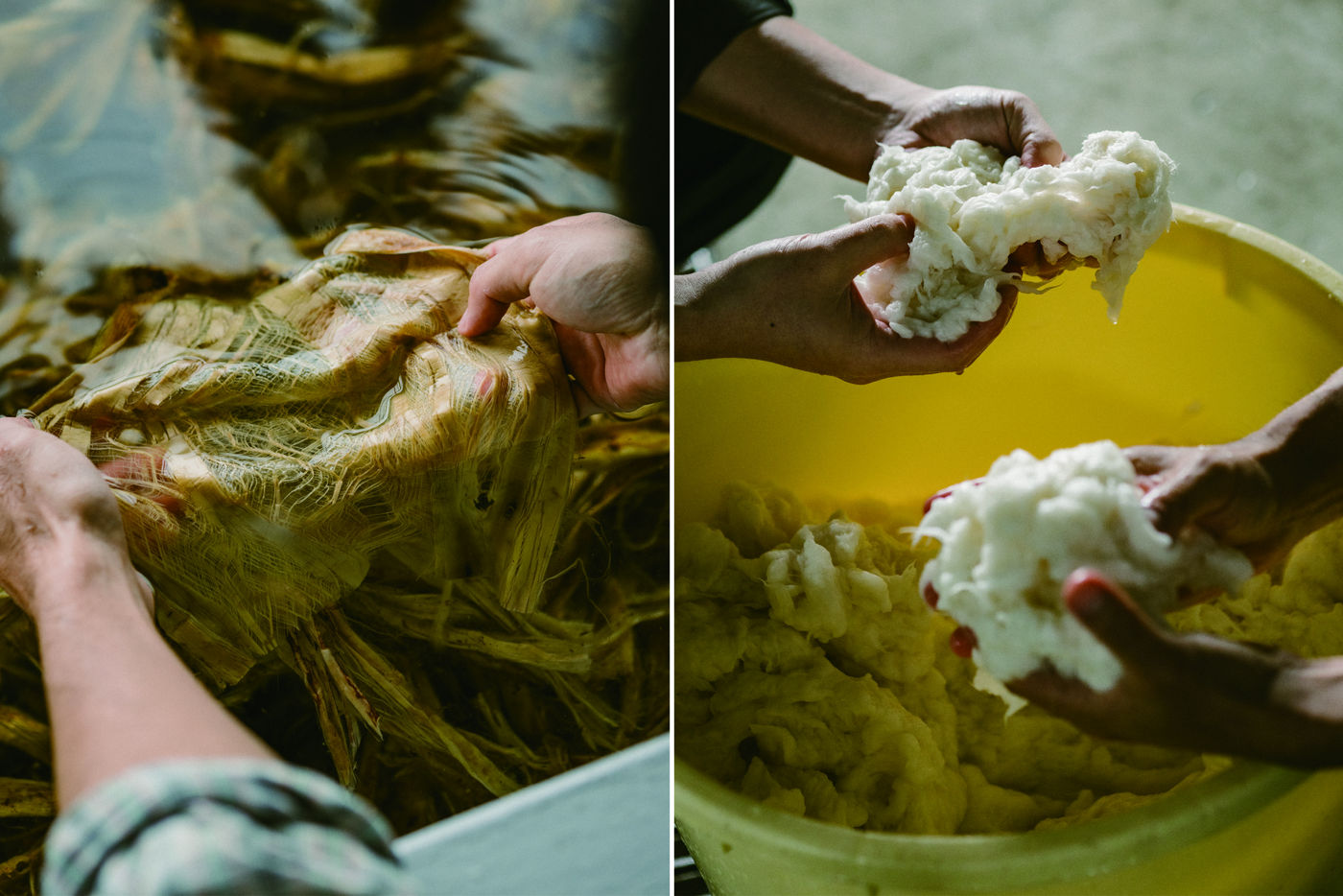
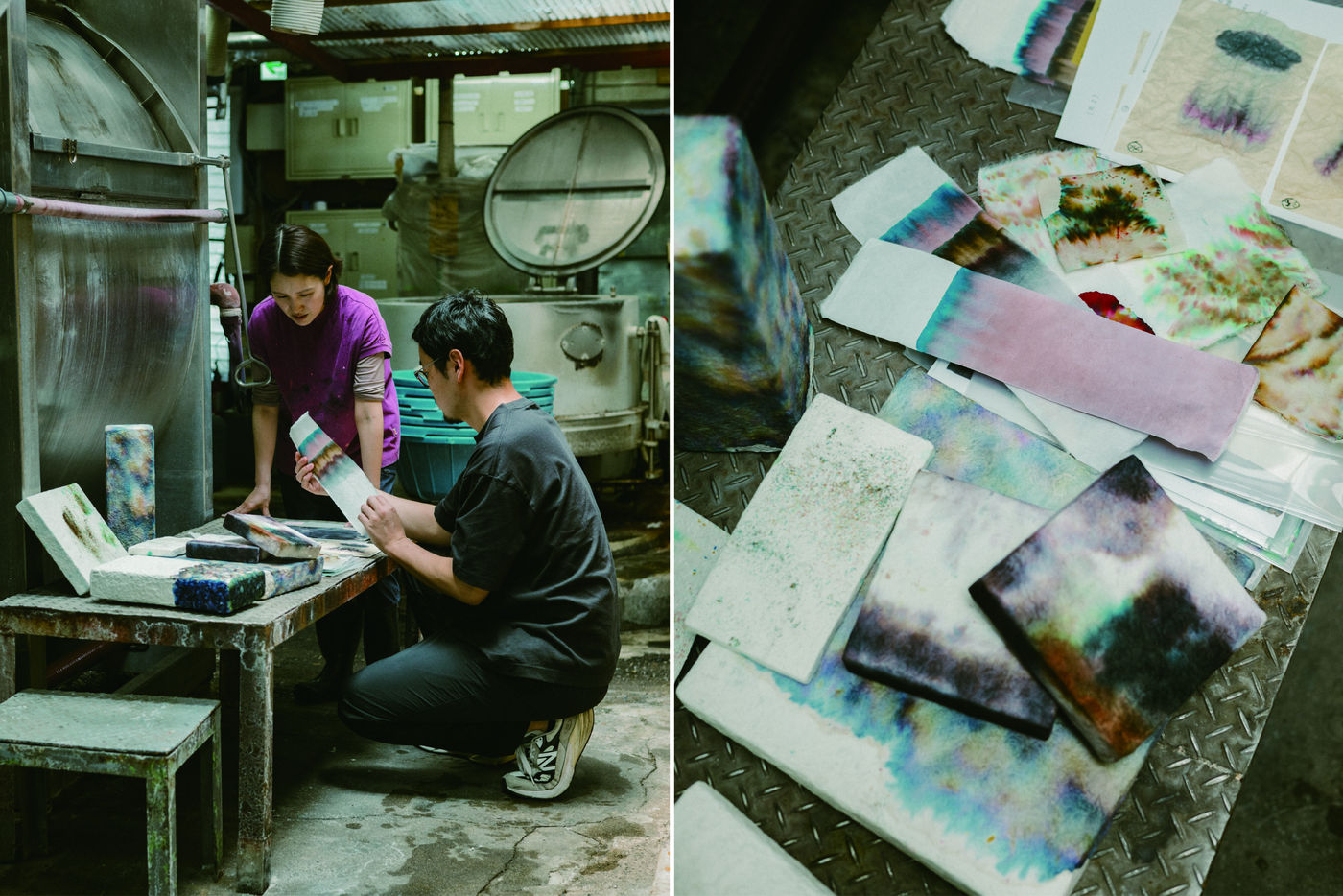
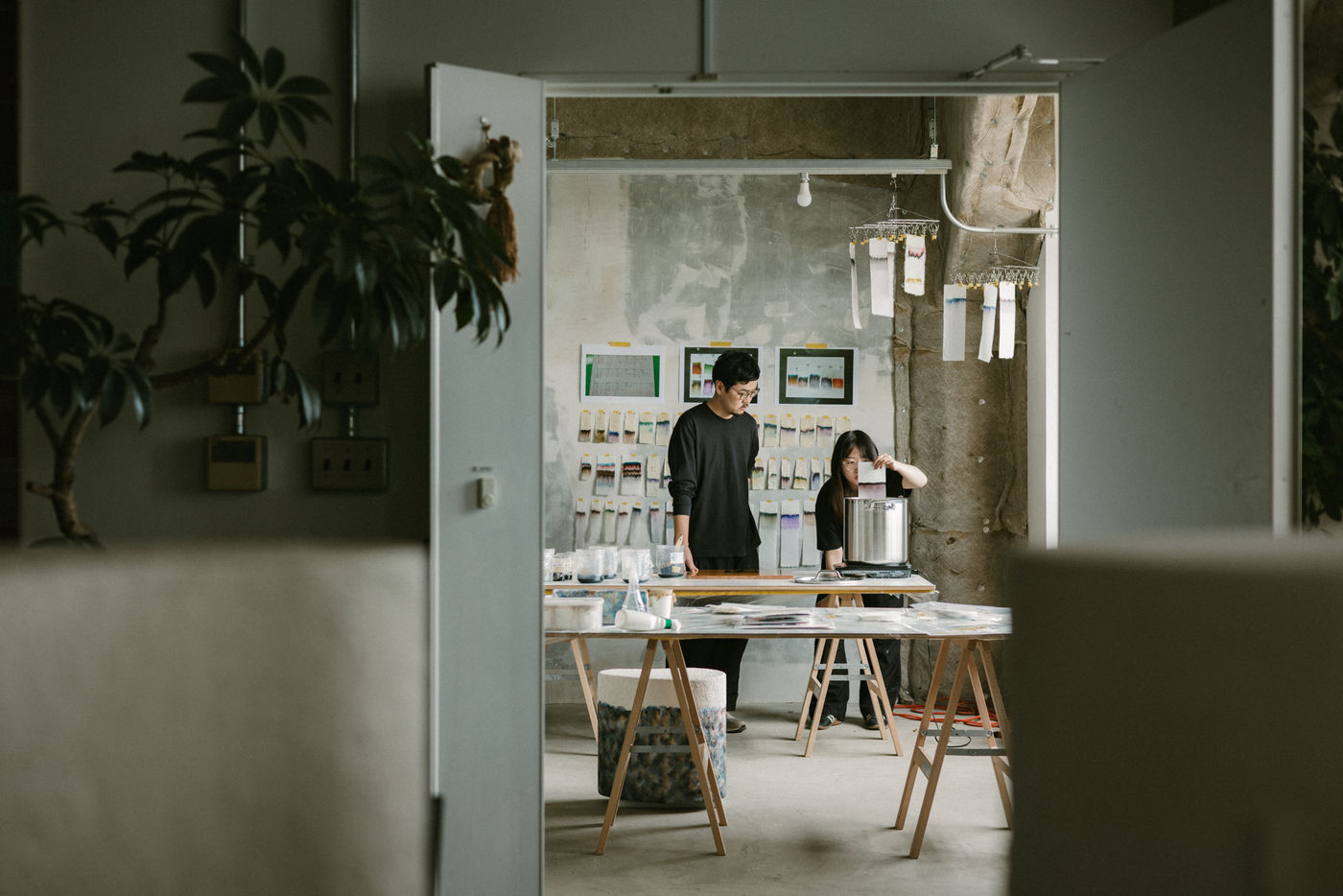
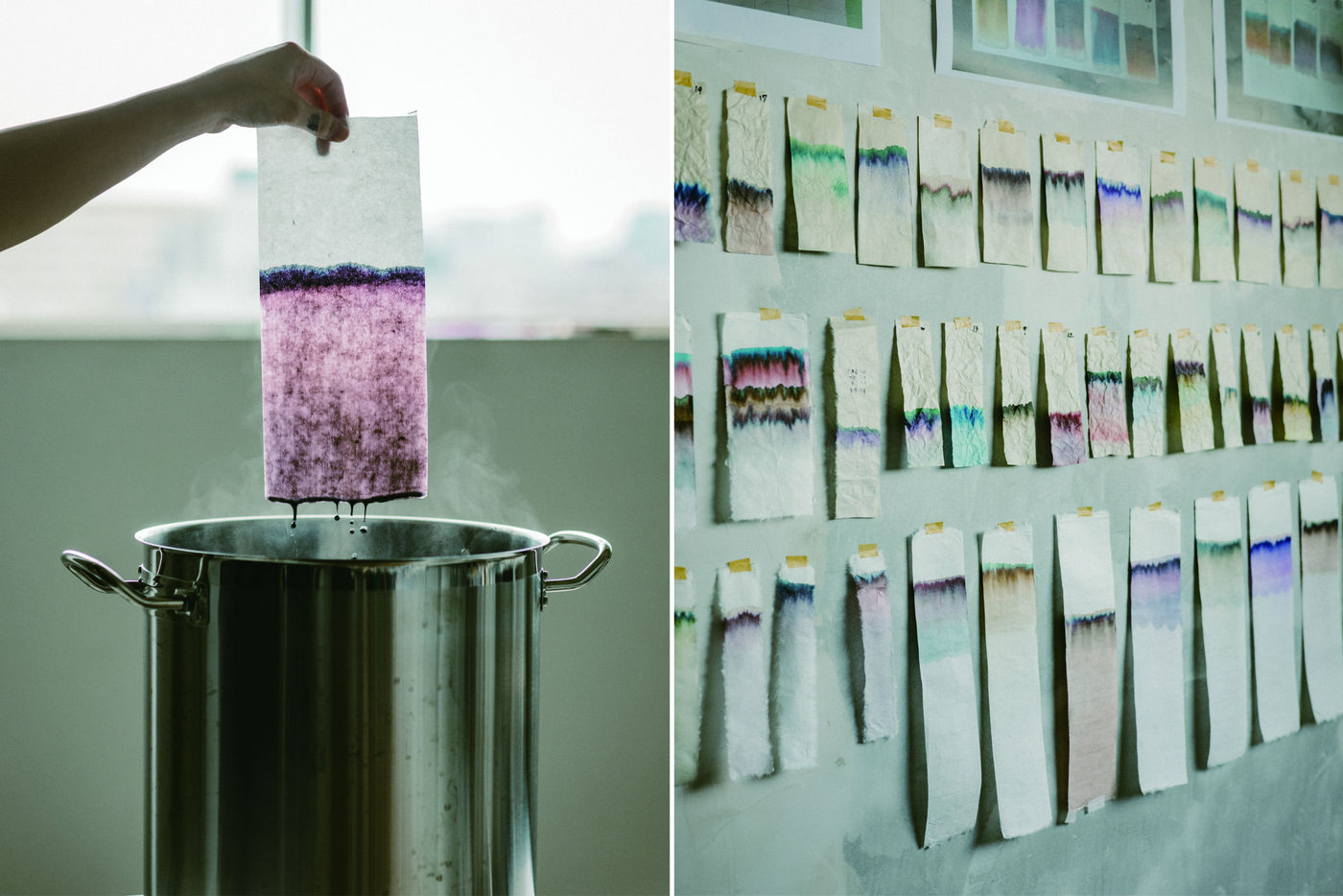
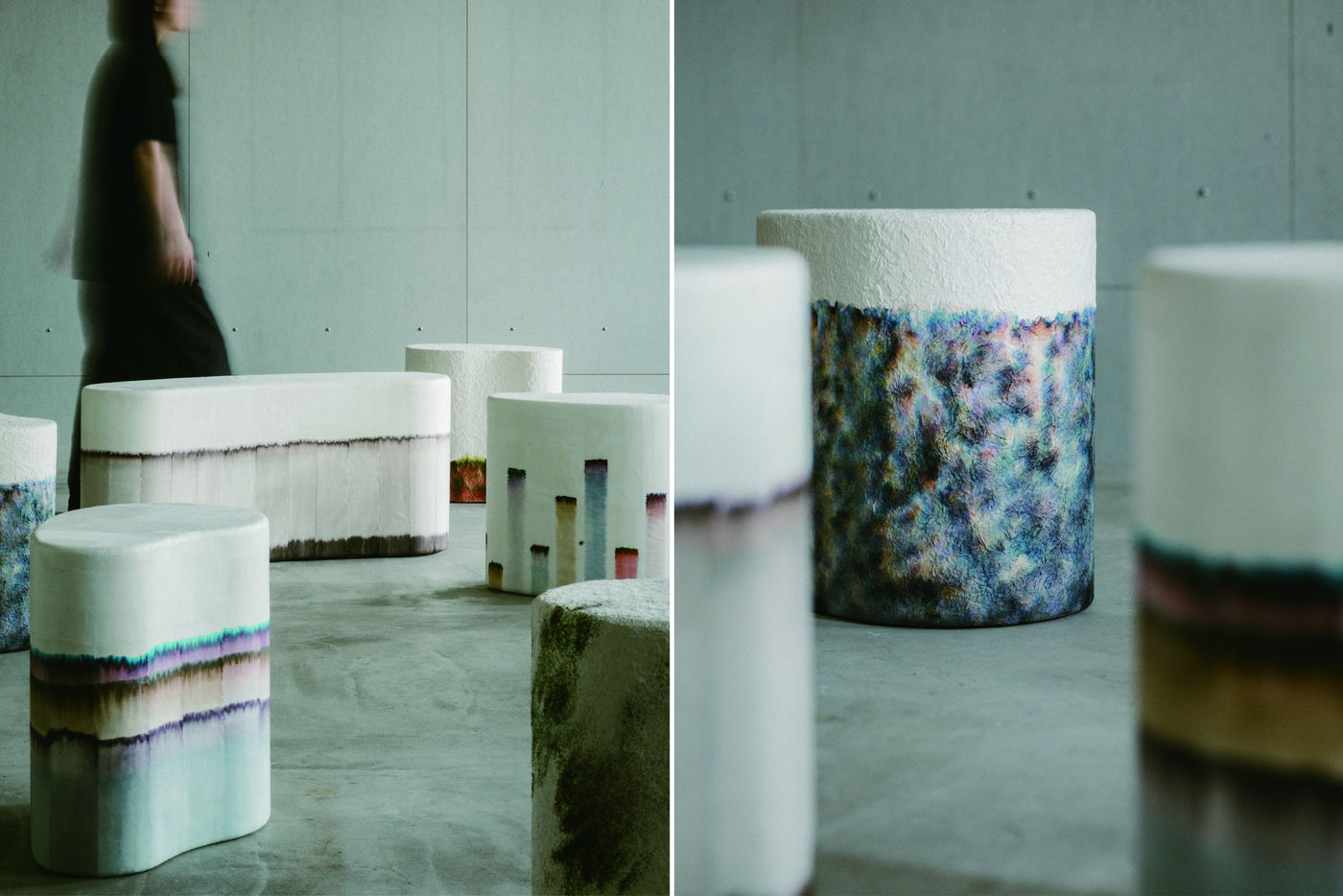
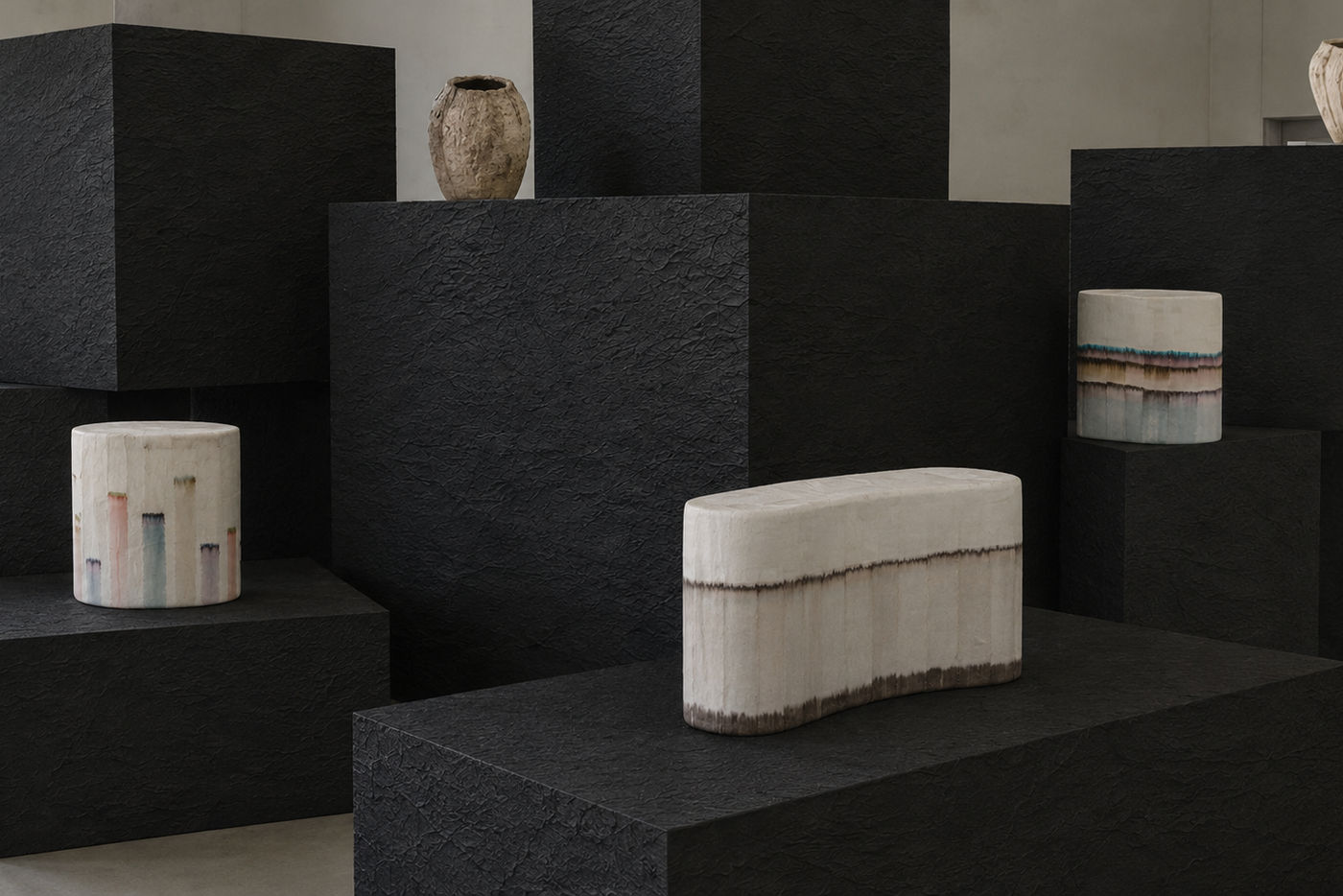
This material research project brings together a washi papermaker, a dyeing artisan, and a designer, with the aim of reinterpreting aesthetics rooted in Japan and traditional techniques cultivated over generations through a contemporary perspective, and sharing them with a wider audience both in Japan and internationally. Though their practices may appear unrelated at first glance, they are connected through a shared foundation: fiber. Over the course of approximately two years of research, the designer became involved from the harvesting of kaji, the raw material used for washi, and physically experienced the entire process through which the fibers are loosened, formed, and transformed into paper. By focusing on the properties of the material, the embodied knowledge of the artisan, the tools, and the processes involved, the project seeks to reinterpret inherited techniques from a new perspective. The long-fiber structure of washi functions not merely as a substrate, but as a structural medium that guides, diffuses, and retains liquid. Drawing on the knowledge and experience accumulated by the washi papermaker and the dyeing artisan, the designer interprets the relationships and phenomena that emerge between their materials and techniques. By moving across these different fields of expertise, the project seeks to carry traditional techniques into new forms of expression and making, revealing possibilities that have yet to be explored.
overview

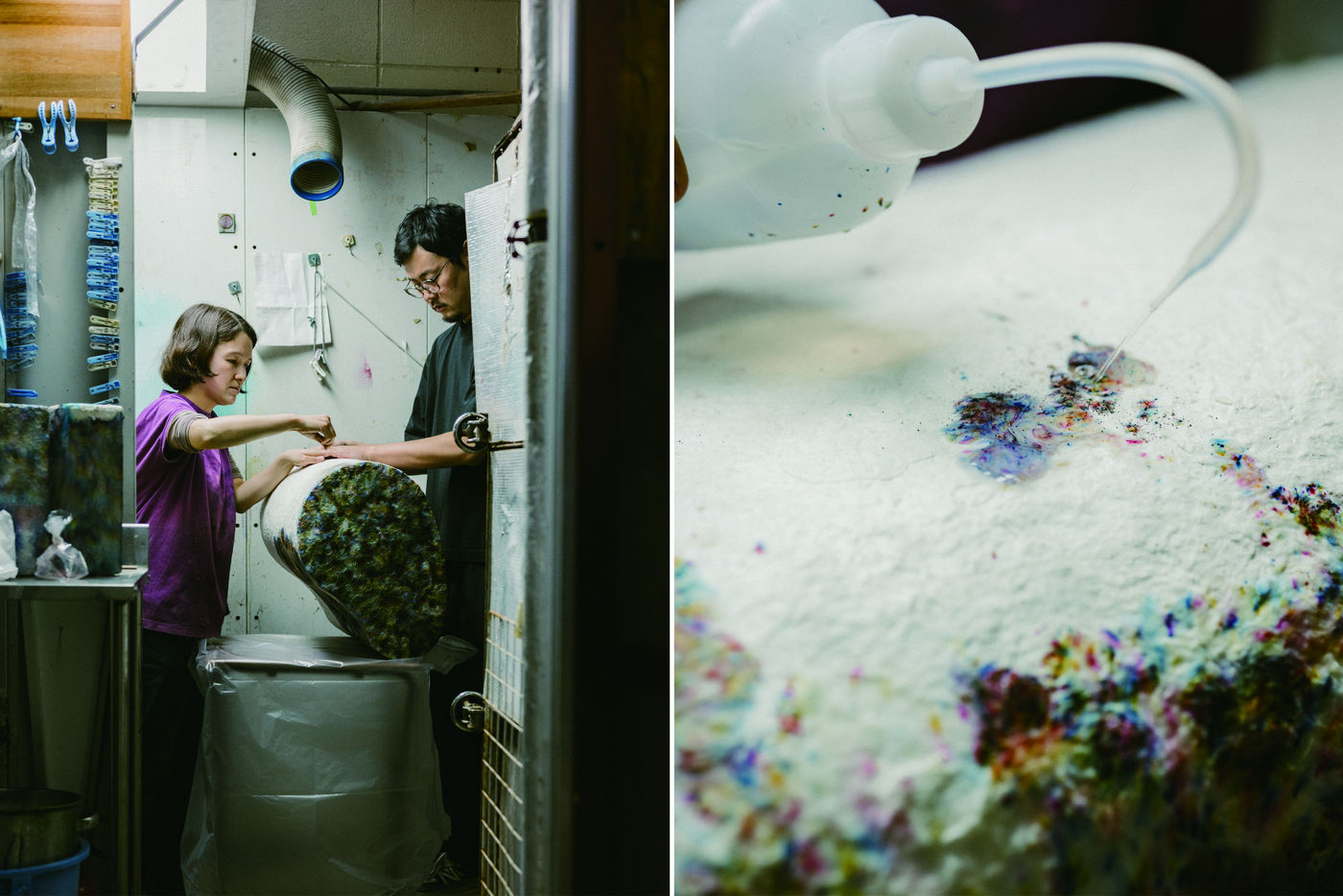
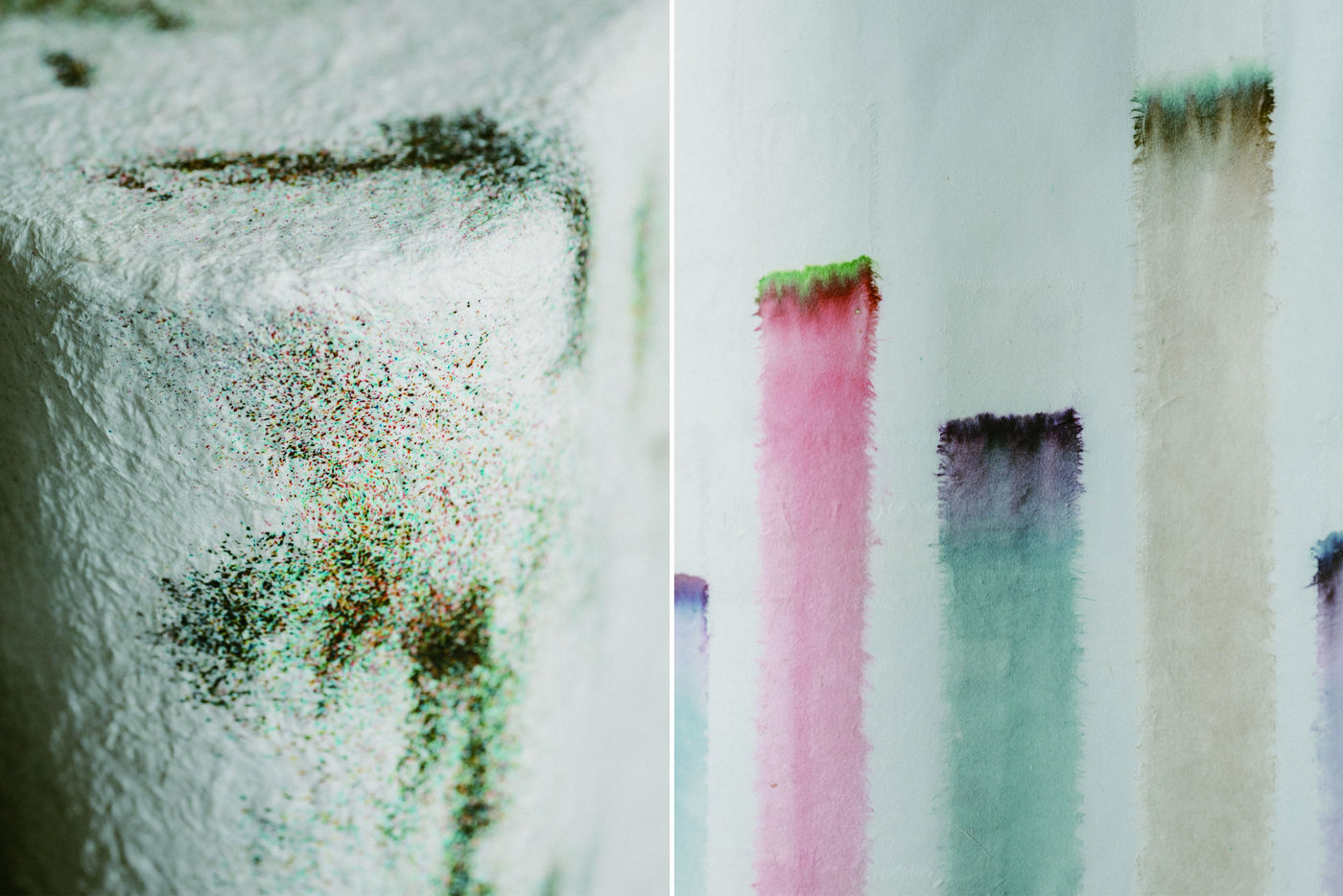
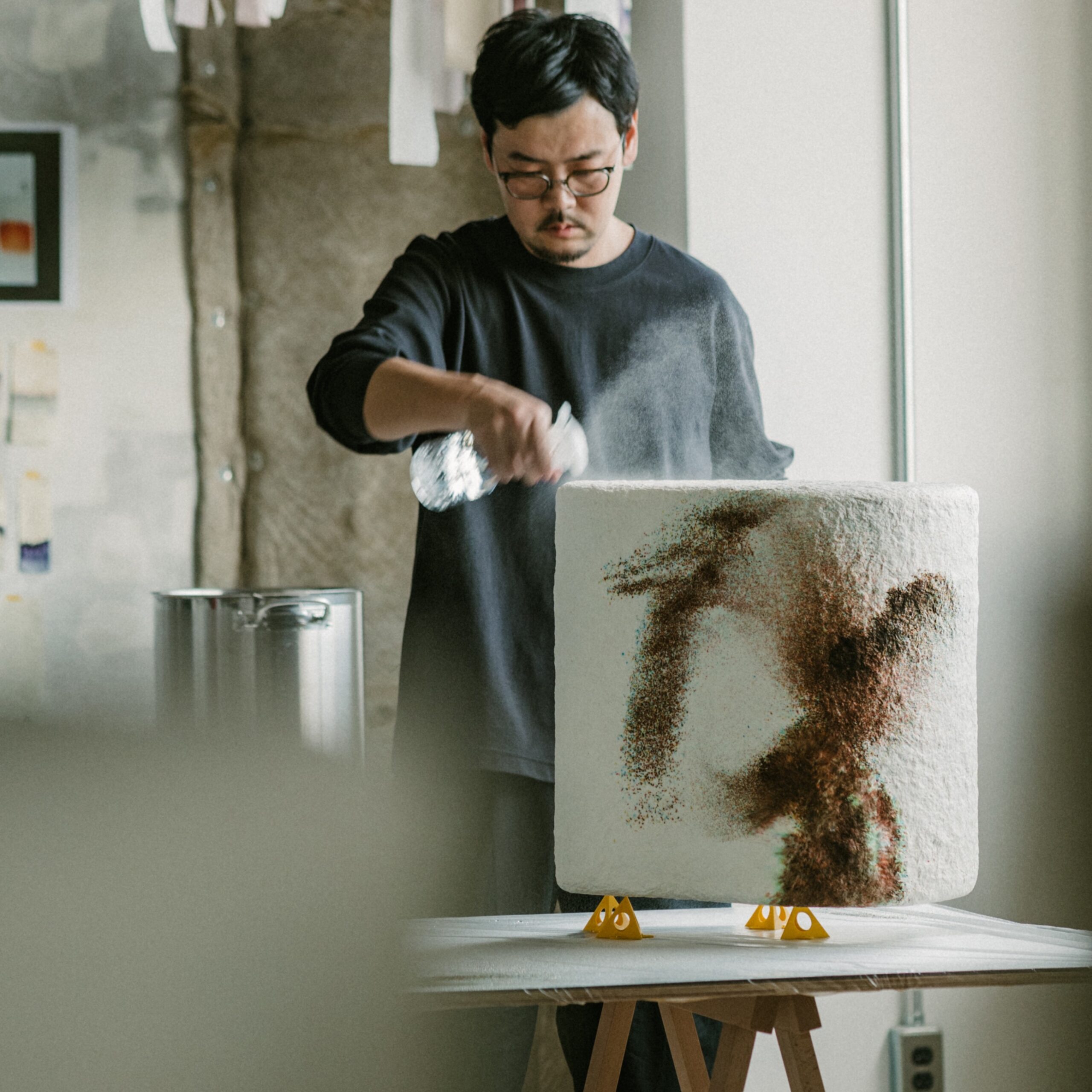
This exhibition connects “washi” and “dyeing”—two practices that have rarely intersected—and visualizes the drift of dyes generated through capillary action. By reconsidering washi not simply as a flat surface, but as an “aggregate of fibers,” the project transforms the movement of dye through its internal structure into a form of expression. As dye travels through the interstices of the fibers, it traces unpredictable paths shaped by conditions such as material density, fiber direction, gravity, and time, leaving unique marks somewhere between control and chance. What emerges is not simply a finished color or pattern, but an image that embodies the time and process of the dye’s movement itself. Returning to the primordial structure of paper as “an aggregate of fibers,” which has been passed down for more than 2,000 years, the project brings together the techniques and perspectives of washi, dyeing, and design. By drawing out phenomena inherent in the material itself, it seeks to open up new possibilities for materials and new territories of expression. As the knowledge and techniques of the three disciplines intersect, new forms of expression emerge in the space between control and the uncontrollable.

member

Gen Taniguchi is the seventh-generation successor of Nao Tesuki Washi, the only remaining washi workshop in Saga Prefecture, Japan, with a history spanning more than 300 years since the Edo period. While preserving this tradition, he also maintains an independent artistic practice. He oversees the entire process of washi production, from cultivating kaji, its raw material, through material preparation and papermaking to final delivery. Kurara Omichi is a textile dyeing artisan at Uchida Dyeing Factory Co., Ltd., a Tokyo-based dye house with a 117-year history. Working with domestic and international fashion brands, she is engaged in dyeing production and technical development while also pursuing her own practice as a dye artist. Yuma Kano is a designer who explores the potential of materials through experimental processes, working across disciplines from product design and spatial design to material research. Bringing together three distinct areas of expertise, the project connects their respective knowledge and techniques through a shared foundation: fiber.