
Do We Really Need Design Events? A Report from the alter. 2025, Tokyo Archive Book Launch
april 23, 2026
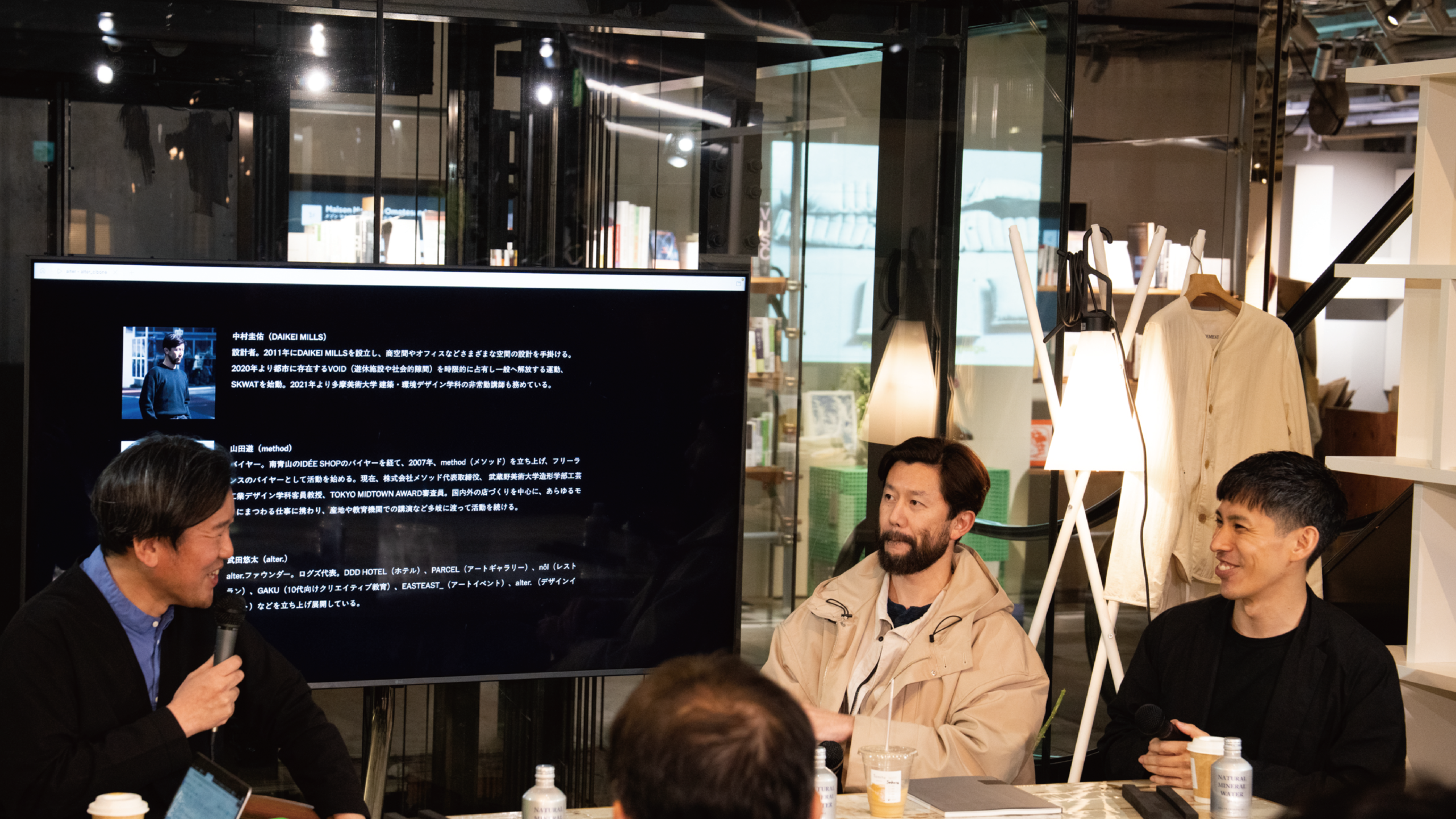
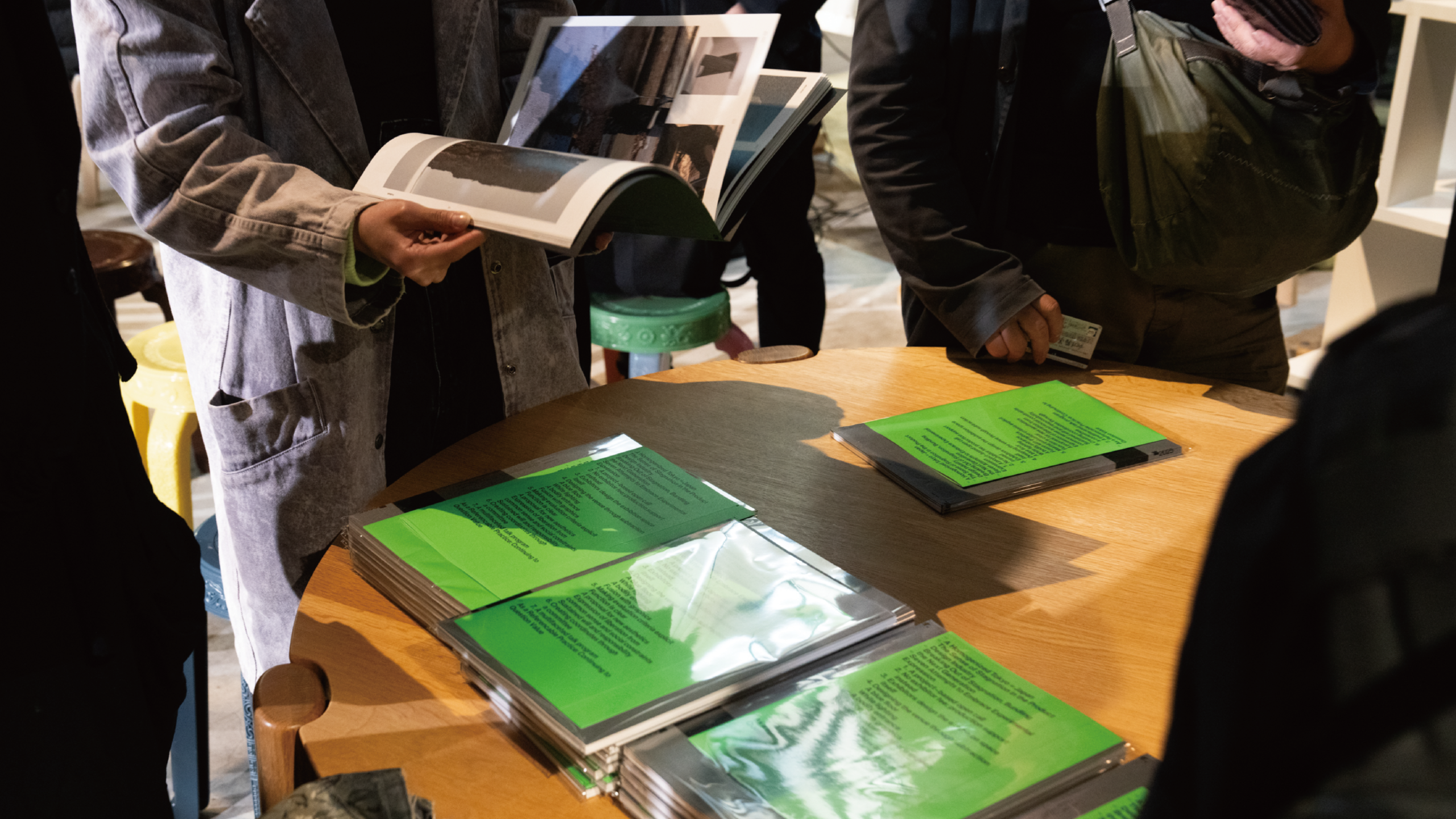
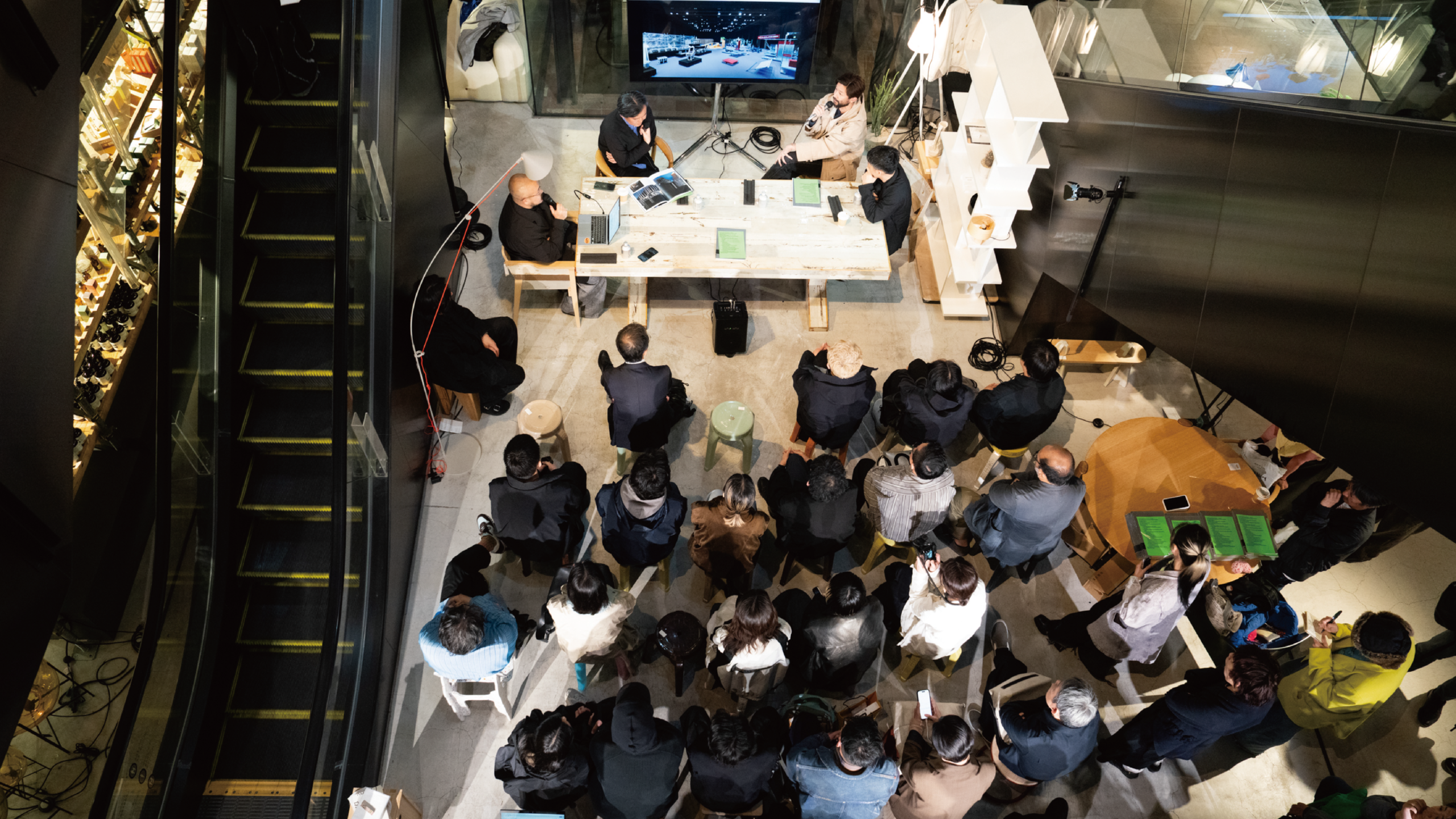
The archive book documenting alter. 2025, Tokyo — held last November — was published on 26 April. Ahead of its release, alter. hosted a launch event on 7 April at CIBONE in Omotesando, Tokyo. Under the title *”What Was alter.? — The Limits of the ‘Design Event’ and What Lies Beyond,”* the evening featured a talk session with two of last year’s committee members — designer Keisuke Nakamura and buyer Yu Yamada — joined by alter. founder Yuta Takeda. What does it really mean to hold a design event in Tokyo today? Here we share the highlights of a conversation that — criticism of alter. included — reconsiders the value of the design event itself.
Have Design Events Failed to Evolve?
Yuta Takeda: Thank you both for joining me today. I’m hoping your candid feedback will help us shape a stronger second edition this October.
Keisuke Nakamura: Thanks for having me. Takeda told me to speak honestly, so I’m looking forward to this.
Yu Yamada: Honestly, my own event clashed entirely with alter.’s dates, so I didn’t manage to visit — hope that’s okay (laughs). That said, I’d heard about it from Takeda beforehand and had the sense it was going to be something different from what we’ve seen before. Having spent so long in the design industry, I’ve felt for a while that design events haven’t really evolved at all. Whether it’s Salone del Mobile or 3daysofdesign, the basic framework hasn’t shifted much, and I’d argue the form of the design event has barely changed in decades.
Takeda: Looking across various events, the quality is undeniably high, but the same players tend to circulate and the whole scene starts to feel homogenised. And because product and interior design involve real production costs, it’s become genuinely difficult for younger designers to take on new forms of expression.
That’s why with alter. we set up a structure where creators from different fields team up to propose new projects — and instead of charging an exhibition fee, we provide production grants of up to three million yen. Rather than lining up existing works, the focus was on prototyping new expressions.
There’s still plenty we can improve after the first edition, but I was glad to hear that quite a few participants have gone on to new work through their involvement in alter.
Designing Not Just the Product, but the Experience
Nakamura: I run a space called SKAC (SKWAT KAMEARI ART CENTRE) in Kameari, where we handle products and curate exhibitions, and I’ve come to feel strongly that what matters is designing the value of the entire experience — not just the product itself, but the surrounding environment and the information that comes with it. So I resonated with alter.’s stance.
That said, if I’m being honest about the venue and the exhibitions, I think there may have been other possibilities worth exploring. I understand the difficulty of holding a design event inside a commercial facility, of course, but when you look at something like Fuorisalone in Milan, the sites themselves are designed to be compelling, and visitors encounter the products within that charged atmosphere. I found myself wondering whether there was a way to turn the commercial-facility setting to our advantage — generating synergy throughout the entire building, and creating an experience that goes beyond simply viewing products.
Yamada: I’ve held events in commercial-facility halls myself, so I understand the constraints. This time the hall’s floor was entirely covered in blue carpet, but in the spirit of creating an alternative space, I think there could have been an option to leave even the interpretation of the space itself to each project.
Takeda: Thank you both for being so candid. Our original intention was to touch the space as little as possible and hand it over to the creators, but internally we decided to lay down the blue floor alone in order to shift the overall impression of the space.
Nakamura: As a result, rather than exhibitors designing the space themselves, it ended up feeling like different products placed within a single given space.
Takeda: This time there weren’t many proposals that built up the space from a structural level, which did contribute to that impression. Of course, alter. is about supporting creators in leading the making of the place themselves, so for the next edition I’d like to create the conditions for freer, more open proposals from them.
Nakamura: Total freedom brings its own difficulties, so it might have helped to articulate the direction more concretely — constraints and conditions included. That’s something I’d reflect on from my own side too.
Towards Collaboration Across Frameworks and Borders
Yamada: The alter. committee is made up of outstanding people, but one thing that caught my attention was that they all come from museums and media in Europe and the US. Last year I went to a design event in Bali, Indonesia, and although it wasn’t necessarily polished, it had real momentum and was genuinely exciting. When we talk about design events the conversation jumps straight to Milan or Copenhagen, but if we’re doing one in Japan or Tokyo, I’m not sure there’s much point in simply rehashing the European template. Thinking through why we’re doing this in Japan, in Tokyo, feels important.
Takeda: With EASTEAST_, the art fair I run separately from alter., we’ve programmed presentations of Asian artists and galleries, but I’ve been genuinely uncertain about how far we can focus on Asia within the field of product design. My sense is that it might still be a little early, and it’s true that for now the line-up leans towards Europe and the US.
Nakamura: I feel there’s a huge opportunity in Asia right now, and we’re entering an era where creators can build something on a far larger scale together. I’d love to see more active collaboration on a global level.
Yamada: More horizontal connections would be great. I’ve been running my own gallery, (PLACE) by method, for over ten years, and I can genuinely feel that spaces sharing similar concerns — including Nakamura’s SKAC — are on the rise. But if everyone simply operates in isolation, I worry the creators themselves will burn out. On the surface, there may be more opportunities to exhibit, but are they actually functioning? As someone running a space myself, I feel we need to connect more.
Takeda: The impulse to support creators is something we all share, so there are clearly many situations where we’d be better off working together.
Yamada: It might also be worth asking whether the design-event format itself still suits the current moment. Recently I’ve had the impression that events are returning to the city. The buzz around last year’s Expo 2025 Osaka, Kansai is one example, and the Tokyo Architecture Festival this May is another — places that genuinely draw crowds. As Nakamura mentioned, it would be great if we could propose something new not only in the product itself but in the situations that surround it.
Nakamura: To be honest, I have my own doubts about the significance of design events. Rather than short-term events that set off a single big “firework,” I think there’s a case for places where expression can happen every day. I took part in alter. as a committee member this time, but speaking as a single creator, I don’t think it’s enough any more to simply wait for events to pick us up.
If you have a problem with alter., you can just as easily create your own place and your own opportunities. In fact, I think designers need to move more proactively and express more on their own terms. SKWAT and SKAC emerged from exactly that sense of urgency.
Takeda: Please, feel free to complain too (laughs).
Nakamura: That said, I do think events like alter. matter. Frameworks like this raise the floor of the entire scene and are genuinely important for the Japanese design scene as a whole, so as designers we need to pursue both approaches.
Takeda: Thank you. At alter. we intend to take on board a wide range of opinions — criticism included — as we prepare for the second edition. Requests about the venue itself, and bolder challenges that extend the exhibition beyond it — we’d love to receive proposals from participating creators as freely and openly as possible.