Toward Open Possibilities: Rethinking Process Through alter.’s Selection
alter. is currently making various preparations for its November event. Here, we introduce the selection process that determined the exhibiting projects. At alter., exhibiting projects are chosen through a review by a committee comprising five designers and curators from Japan and abroad. What aspects of the submitted projects caught the committee members’ attention, and what potential did they discover?
Defining Product Value
For this edition of alter., we selected exhibiting projects through a committee review process involving five designers and curators from Japan and abroad.
However, given that the committee includes curators from world-renowned art institutions like MoMA and Centre Pompidou, as well as architects pursuing distinctive practices in Japan, each member brings different expertise and backgrounds—naturally leading to diverse perspectives on products and design. Rather than having alter. unilaterally define product value criteria, we first asked each committee member to establish their own standards (please see our interview articles to learn about each member’s specific criteria).
Through interviews with committee members, numerous keywords emerged—”appropriate scale,” “needs,” “empathy,” “authenticity,” and more. At alter., we aim to create a space that evaluates product value from multiple perspectives, rather than judging solely on formal aesthetics.
For the specific selection process, committee members scored projects based on submitted materials. We adopted a system where each project receives a score from 1 to 4, with lower numbers indicating higher quality—meaning projects with lower total scores received higher overall evaluation from the committee.
This year’s alter. is envisioned not simply as a showcase displaying products, but rather as a platform where diverse creators gather to present not only their products but also their display methods and spatial staging. Therefore, in the committee review, scores were assigned separately for both the product and the presentation.
Some cases saw products rated highly but presentations needing improvement, while others featured highly original presentations but products that were difficult to envision, resulting in lower scores. The two aspects sometimes received different evaluations, and opinions among committee members occasionally diverged. While the selection process serves to determine exhibiting projects, it simultaneously reveals what kinds of products the committee and alter. itself value—making the evaluation criteria themselves visible.
 Five Committee Members Supporting alter.
Committee Dialogue
Of course, the final exhibiting projects weren’t simply arranged by committee scores. To explore various possibilities—including projects that scored lower but could improve significantly with certain modifications, projects that might benefit from adjusting exhibition scale for better presentations, and projects where committee opinions diverged—we held an online meeting bringing all committee members together.
Since this was the first time all committee members gathered, the meeting began with each member offering comments on the submitted projects overall.
“I found it wonderful that many submissions took highly conceptual approaches rather than being mere products. On the other hand, I sense that Solo booths tend to receive lower evaluations. Compared to larger booths that enable cross-disciplinary presentations, Solo booths focused primarily on product display inevitably have less impact,” observed Tanja Hwang, a curator in MoMA’s Department of Architecture and Design.
Architect Keisuke Nakamura, who leads DAIKEI MILLS and SKWAT, responded: “Perhaps Solo booths are no longer necessary.”
“I think alter. differs significantly from conventional design events, and I’m delighted that most applicants proposed projects that understood alter.’s intentions. That’s precisely why I don’t think Solo booths—which tend to remain limited to product display—are necessary. What makes alter. interesting is how it brings together creators from various fields—not just product designers, but dancers, photographers, and others—to collaborate and deliver presentations that break established conventions.”
Hearing Nakamura’s opinion, Kristine, an independent curator who leads SAY HI TO, and Olivier Zeitoun, a curator at Centre Pompidou, nodded in agreement.
“It’s not that Solo booth products are bad, but the event concept might become somewhat diluted,” Kristine pointed out. Olivier added, “Among the highly-rated Solo booth projects, some might align with alter.’s overall concept,” suggesting the need to reconsider Solo booth submissions.
Following this discussion, alter. chose to convert several projects originally submitted as Solo booths into presentation format. While initially planning three types of presentations (S through L based on exhibition space size) plus Solo booths for product-only displays, considering the committee discussion and alter.’s overall concept, all exhibitions will now adopt presentation format.
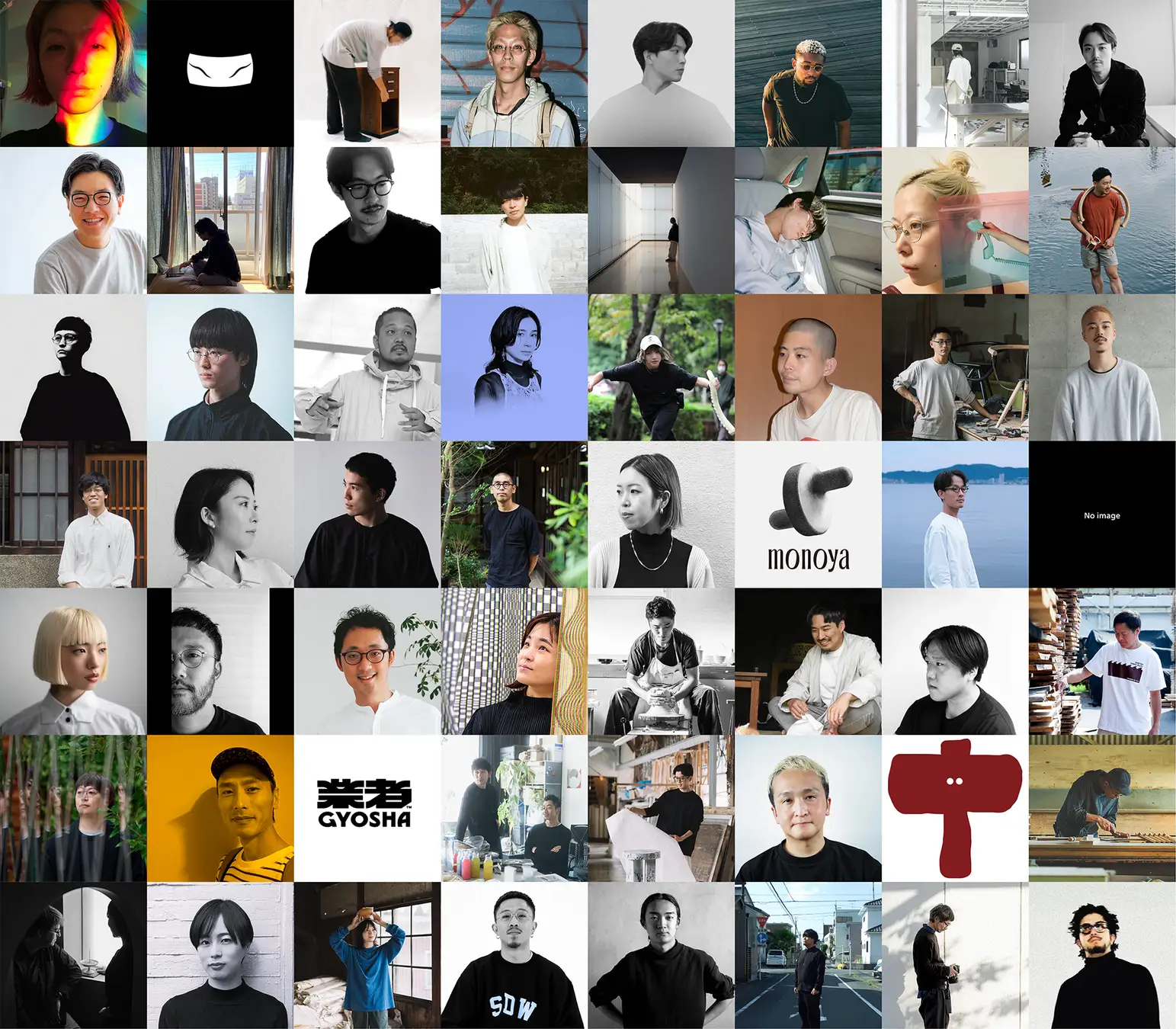
This year’s alter. features a total of 56 creators participating.
A Process of Possibilities
Throughout the meeting, various opinions emerged, and we frequently requested project updates from applicants. Some projects originally submitted for L-size spaces were changed to M-size, while others received requests to modify presentation methods or reconsider product approaches—the update requests varied widely.
For instance, one project was highly praised for its collaboration between creators across regions, but feedback suggested improving the presentation to better communicate this aspect. Another project was noted for having an excellent presentation, though the connection to the product remained unclear, prompting suggestions to reconsider the product itself.
Since alter. emphasizes having creators develop projects specifically for this event, many submitted proposals made it difficult to envision what the final product would be or its quality level. In product design events, proceeding with preparations without knowing the final product might seem risky in some sense. However, it simultaneously means that exhibiting projects remain open to various possibilities. Indeed, several projects updated their plans following committee meetings, refining their products and presentations to better align with the project concepts and alter.’s overall vision.
Rather than presenting predetermined answers from the outset, we continue exploring alternative possibilities through ongoing collaboration with creators and committee members—this process itself represents one of alter.’s defining characteristics as an event.
Through this process, alter. has selected 11 projects involving a total of 56 creators. Our Journal will introduce each project in the coming issues. What projects will emerge from this process? What products will be displayed? What questions will creators raise? Please look forward to it.