
Refusing Easy Answers, Offering Complexity to the World
august 15, 2026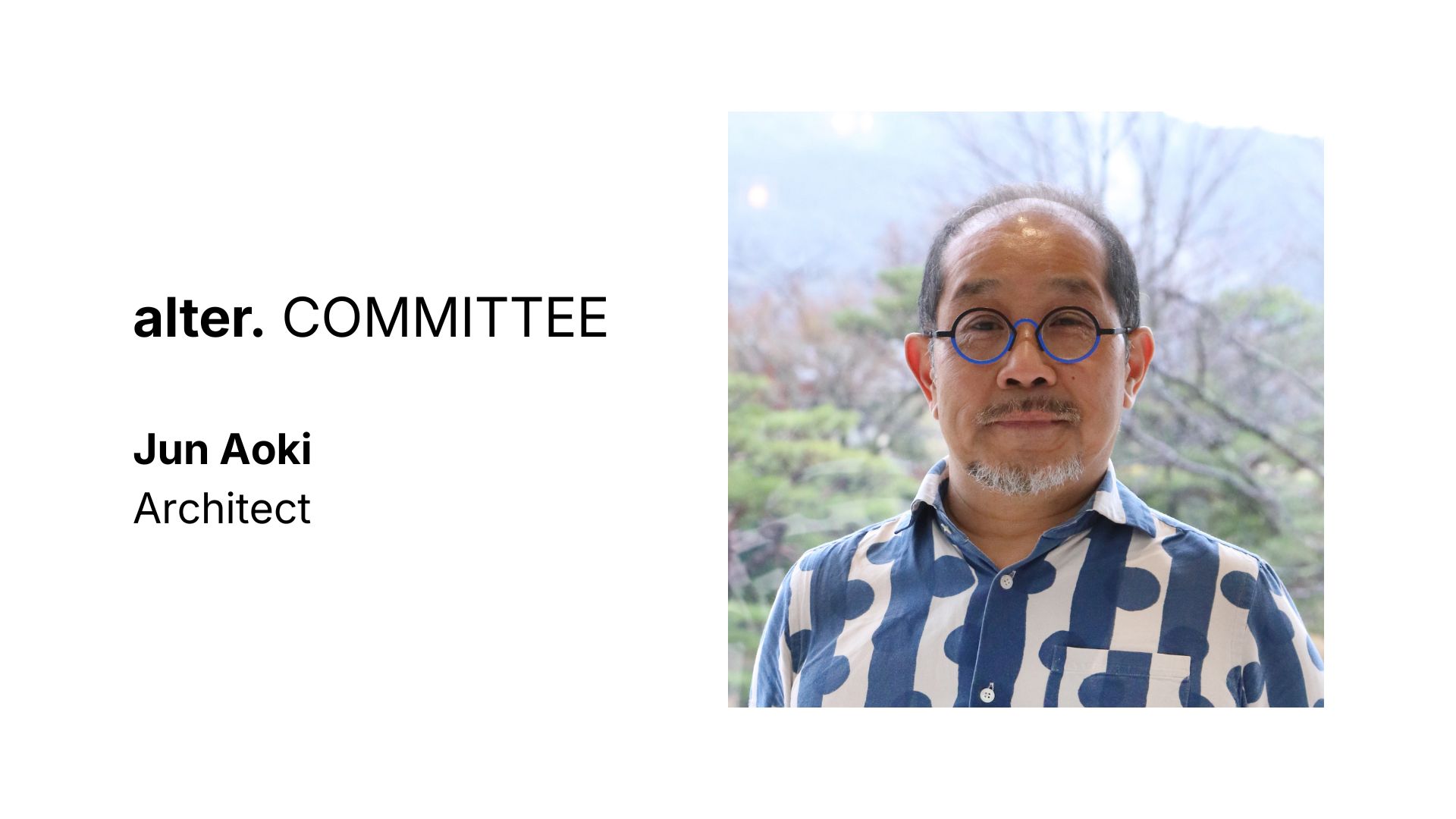
The projects shown at alter. are selected through deliberation by committee members from Japan and abroad. Drawn from a range of fields — curators, journalists, architects, and others — each member approaches product design from their own distinct vantage point. Through alter.’s Journal, our interviews set out to reveal how each committee member sees contemporary product design.
For our third interview, we spoke with Jun Aoki, one of Japan’s leading architects. Serving as director of the Kyoto City KYOCERA Museum of Art and as curator of the Japanese Pavilion at the Venice Biennale International Architecture Exhibition, Aoki has continued to think about “architecture” from a range of vantage points beyond the design of buildings themselves. Here, we explore the possibilities he finds in contemporary product design.
Between “Architecture” and “a Building”
──Beyond the design of buildings, your work has expanded year on year — director of the Kyoto City KYOCERA Museum of Art, curator of the Japanese Pavilion at the Venice Biennale International Architecture Exhibition, and so on. Across that path, what experiences and sensibilities have shaped the stance you hold now?
What matters most to me is the sense that “architecture” and “a building” are different things. A building is something that holds a concrete form, but architecture, I think, is a somewhat broader undertaking. The places and environments we find ourselves in always exist before us, and we can never fully step outside them. But to take that “already-there thing” and try to see it again, as if from the outside — that attempt, for me, is architecture. Shops, museums, the curation of exhibitions — for me, they are all connected, as work that nudges how a place is seen, and how people and their environment relate, into a slightly different register.
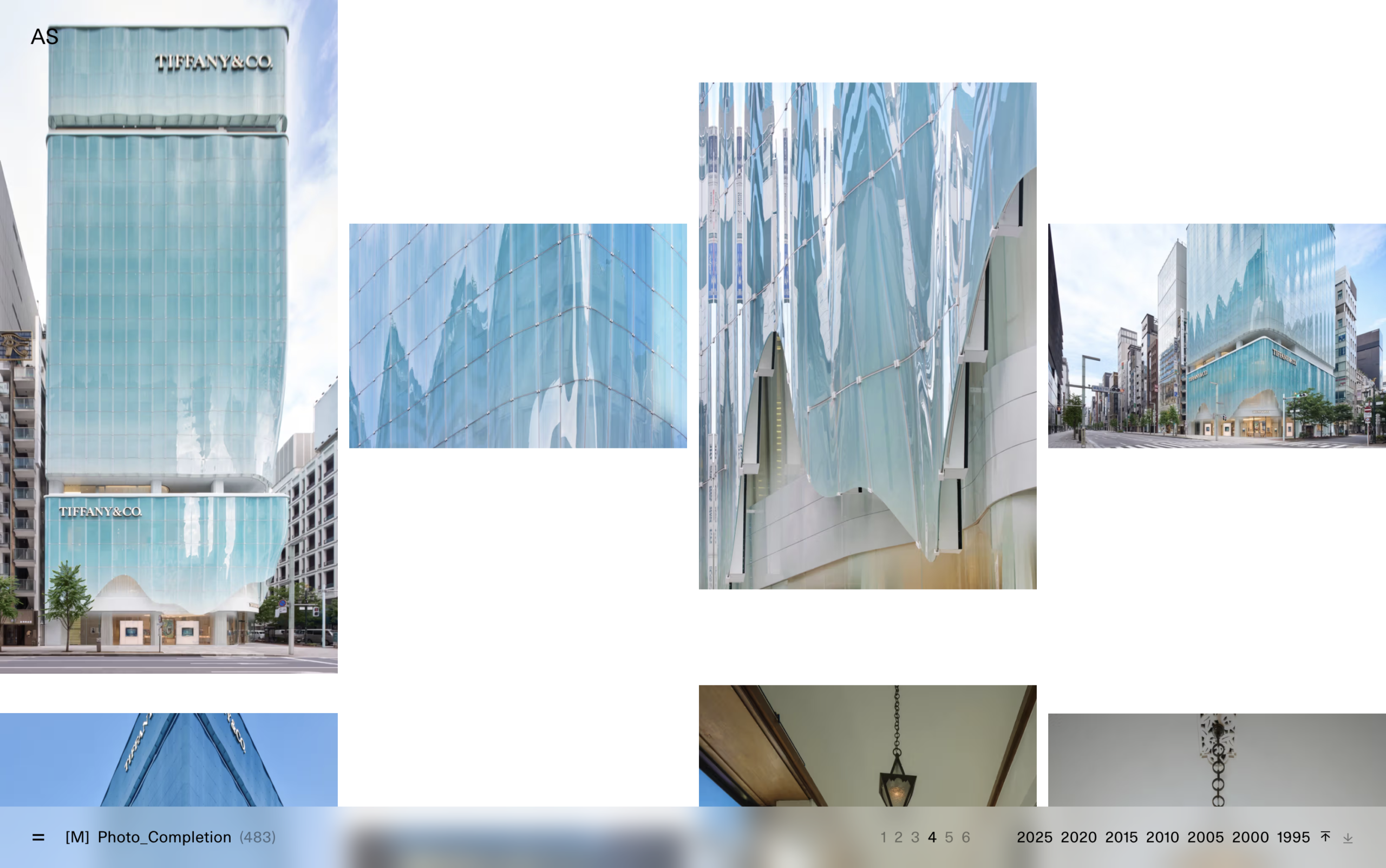
──From the Louis Vuitton stores to the Aomori Museum of Art and the Kyoto City KYOCERA Museum of Art, you’ve worked on projects with vastly different scales and programs. Is there something you have consistently kept in mind?
My work always begins from “the place that is here, right now.” The streetscape, the movement of people, the light, the existing buildings and institutions — I start by receiving the everyday that is already there. But rather than tracing that everyday as it is, I want to find, and draw out, another everyday that has not yet appeared within it. However different the scale or program may be, for me architecture is not about bringing in something new from outside, but about raising up, from within the reality that is already there, possibilities not yet seen.
──At the Kyoto City KYOCERA Museum of Art, as director, you stand not only on the “designing” side but also on the “operating” side. Has the way you approach architecture changed?
I think of architecture as an interactive movement that arises between our activity and the environment that serves as its stage. Put simply, it is a dynamic dialogue between *nakami* — the contents — and *utsuwa* — the vessel.
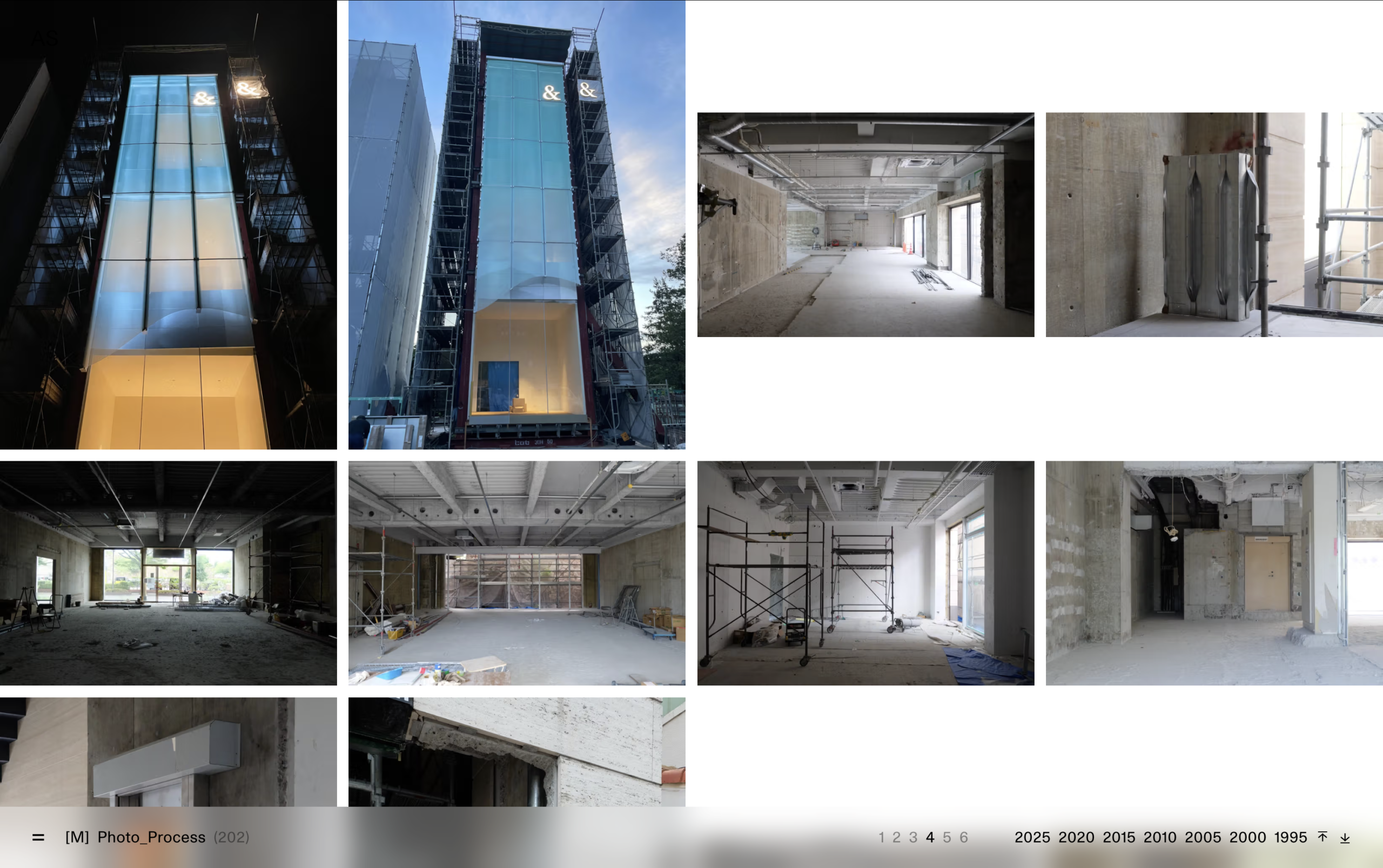
When you are on the designing side, the contents inevitably live within your imagination. But once you stand on the operating side, the movement of people, the way things get used, the institutions, the passage of time — all of it becomes visible as something real. Through that experience, I have come to think of architecture more strongly not as a finished object, but as a place that keeps being renewed through daily activity.
Slowing Down in Order to Make
──At the 2025 Venice Biennale International Architecture Exhibition, you placed generative AI as one of the themes in the Japanese Pavilion. In an era when AI is being woven into the design process, how do you think “creativity” and “authorship” will transform?
To “make” something — the final result that emerges does, of course, matter, but essentially, I think it means moving back and forth, again and again, between “what is being made” and “what one is trying to make.” Within that back-and-forth, directions you had never imagined at the outset, paths you yourself didn’t know about, begin to emerge little by little. That, I think, is where the joy of creation lies.
──Are you saying that kind of experience is difficult for AI?
AI is an extremely powerful tool, but I suspect it is still not very good at the kind of experience in which, within that uncertain back-and-forth, the very purpose of the work shifts. Authorship, too, I think, appears not as a fixed individual character, but in how one takes on that wavering and hesitation.
──Younger creators are precisely the ones most exposed to these shifts in their environment, including the use of AI. What are your thoughts on design and architecture education in Japan in recent years?
To repeat myself, to “make” something is not simply about producing a result quickly; it is about moving back and forth between “what is being made” and “what one is trying to make.”
For that, there has to be time to slow down. There are things that only become visible when your thinking wavers, hesitates, or doubles back. But today’s society and education, if anything, are oriented toward speeding up. Within that current, I think there is a force of resistance in deliberately thinking slowly, in refusing to give easy answers.
──alter., too, values not only the finished product but also process and presentation. When you design the place in which a product is set, what do you weigh most?
A product is not only there to be looked at; fundamentally, it is something that is used. So I think it matters to consider what kind of space, what kind of bodily movement, what kind of time the product is used within.
At the same time, it is not simply that the space comes first and the product is placed within it. The presence of a certain product can bring into being a new sense of distance, a new mode of behavior, a new kind of atmosphere. What I hope to see is not a space that explains the product, but a space that comes into being only because that product is there.
Staying with Difficulty and Complexity
──alter. evaluates products through three perspectives: “function,” “beauty,” and “expression.” In this round of judging, which will you weigh most?
I don’t think of design as merely the “solution” to problems that already exist. What matters more, I think, is finding what has not yet been recognized as a problem at all. In that sense, function, beauty, and expression are not axes of evaluation that exist separately in advance; depending on what one finds to be the problem, their relationships with one another also keep shifting.
This time, too, I want to look not only at the level of polish, but at how far the product or project throws its question. That distance is what I want to see.
──How do you see the challenges that contemporary product design is facing?
What is changing most profoundly right now is the very meaning of “daily life.” How we work, how we move, family, the city, consumption, our sense of the body — the premises on which things are used are deeply unsettled.
──And what, then, is being asked of designers?
Not only to critique that change from outside, but to throw oneself into it as well — and still, from within that, to make objects as elements of the world one envisions. That is the question. The task for product design, I think, is not simply to generate new functions or forms, but to ask what image of the world it can offer, as a concrete object, within a daily life that keeps changing.
──Active globally as you are, what impressions do you have of Japanese creativity and design?
I feel as though the world as a whole is moving toward a certain homogenized aesthetic sensibility and set of evaluation criteria. Information is shared, technology circulates, and what is considered “good” is being standardized much faster than before. Within that, Japanese creativity is at once at an advantage and at a disadvantage. Seen by international standards, there are aspects that are hard to explain, while at the same time, it feels as though it works from a ground that is slightly offset from that frame.
That offset, I think, is not a weakness but a vital possibility. Even while connecting to the world, how can we keep holding on to what cannot be measured by the same yardstick alone? That, it seems to me, is where the meaning of Japanese design and architecture lies.
──It sounds as though that same stance will be asked of alter.’s exhibitors.
That said, this distinctive ground is not something that only needs to hold up inside Japan. It must also be able to withstand the gaze from outside Japan — and that is very difficult. If you try to communicate efficiently, you can organize things to be clear and shape them so they are easy to explain. But in that process, the complexity and ambiguity that were originally there can be lost.
What I hope from the exhibitors is that, rather than making things easily understandable, they will stay with a certain difficulty and complexity, and take on the challenge of how to offer that to the world.